The Wise Counsel Of Shaykh Ashraf Ali al-Tahanawi-Sunnipath
Shaykh Ashraf Ali al-Tahanawi
Acquire knowledge of Deen according to your needs; either by asking the Ulama or by reading a book.
Abstain from all sins.
If you commit any sin, repent immediately.
Do not hold back in fulfilling anyone's right.
Do not cause anyone physical or verbal harm.
Do not speak ill of anyone.
Do not have any love for wealth, nor any desire for name and fame.
Do not concern yourself with extravagant food and clothing.
If someone rebukes you for your mistake or error, do not try to justify your action.
Do not laugh excessively nor talk excessively.
Do not go about repeating or mentioning an argument that may have taken place between two persons.
Always be mindful of the rules of Shariah in everything you do.
Do not display laziness in executing any act of Ibaadah.
Try and spend most of your time in seclusion.
If you have to meet and converse with others, meet them with humility and do not display your greatness.
Associate very little with rulers and those who hold high positions.
Stay very far from irreligious people.
Do not search for the faults of others.
Do not have evil thoughts about anyone. Instead look at your own faults and try to put them in order.
You should be particular in offering your salaat in the proper manner, at the proper time with concentration.
Always occupy yourself in the remembrance of Allah, either with
your heart or tongue.
If you experience any satisfaction in taking the name of Allah, then express your gratitude to Allah.
Speak in a nice, humble way.
Set aside specific times for all your different tasks and abide strictly to these times.
Consider whatever regret, sorrow or loss you may experience to be from Allah.
Do not think about worldly matters, calculations, profits and losses, etc. all the time. Instead think about Allah.
As far as possible, try to help and benefit others irrespective of whether it be in worldly or Deeni matters.
Do not eat and drink too little to the extent that you become weak and fall ill.
You should not eat and drink too much to the extent, you feel lazy in carrying out the different acts of Ibaadah.
Do not have any desire or greed for anything except Allah.
Do not allow your mind to wander towards any place, thinking that you will be able to benefit or profit from there.
Be restless in your quest for Allah.
Be grateful for the favours that are bestowed upon you irrespective of whether they are plenty or few.
Do not be depressed with poverty and destitution.
Overlook the faults and mistakes of those who are under your control.
If you learn of any fault of someone, conceal it.
Be in the service of guests, travellers, strangers, Ulama,
and pious servants of Allah.
Choose the company of the pious.
Fear Allah all the time.
Remember death.
Set aside a certain time daily, wherein you should think about all
your actions for that day.
When you remember any good action done, express gratitude. When you remember any evil action, repent.
Don't ever speak a lie.
Live with bashfulness, modesty and forbearance.
Do not be conceited by thinking to yourself that "I have such-and-such qualities in me."
Don't ever attend gatherings that are contrary to the Sharah.
Continue making Duaa to Allah to keep you steadfast on the straight path.
To be proud of a blessing is pride but to consider it a gift from Allah & keep in mind your incompetence is thankfulness. Pride develops in some Muslims; They pray and hate those who don't and consider them inferior.
Sins are very dangerous and must be avoided.
Pay attention to Allah, not to worries, they will disappear.
When Allah's name is taken say Jalla Jalalahu or Taala, once in a meeting atleast, preferably every time if possible.
Neither consider your worship such as to be proud of, nor consider them useless.
If your friends and relatives do not love you, be happy that Allah has removed others from your heart.
When Allah is angry ,you see a wrong thing as right and wrong superstition appear as facts.
Patience becomes easy by crying to Allah, as it removes the pressure.
Do Zikr with the intention of developing love of Allah, it will have it's effect.
We are born for worries, it will end in Paradise, so forget
its ending now.
Inform the person you have back-bited, after a short while you will stop back-biting.
Do not quote somebody without enquiry or research.
Deeds are rewards themselves, so why do you ask for reward on rewards.
To gain the love of Allah, join the company of the Saints (Ahlullah.)
Hidden etiquette is to be with Allah, all your time, events and dealings.
Ask every one to say a word of prayer for you. You do not know on whose tongue is acceptance .
In the company of saints (Ahlullah) atleast you begin to notice your mistakes and sins.
Appreciate, value and remember the Deeni favours which your parents have bestowed to you.
If sometimes parents act unjustly, bear their injustice with patience.
One can only regard oneself to be insignificant if the respect, honour and love of seniors are embedded in the heart.
Disrespect is more harmful than sinning.
Juniors should at all times keep in mind the seniority of elders. Do not regard yourself equal to elders.
Disrespect is the effect of pride and arrogance.
Do not ask a need from such a person who you know feels obligated to comply even though he may not be disposed to assist.
If you have been told to come at a certain time (i.e. an appointment), then be there at the appointed time.
Do not express yourself in the presence of the sick or his family, in a manner which makes them lose hope in life.
Shariat is Aqaaid (beliefs), A'maal (good deeds), Muamalaat (transactions), Akhlaaq (character) & Muasharat (conduct)
If someone is hurrying along the road, do not stop him for hand -shaking.
When going to meet a person ,do not sit with him so long as to inconvenience him.
While eating do not mention such things that nauseates or disgusts others.
Do not curse or speak ill of time (the age). Time is blameless.
Where the company consists of three persons, two should not speak by whispering to each other.
Do not waste the time of a busy person by prolonging the conversation by small talk.
Do not use extravagant titles or flattery when writing.
Do not read the letters of others. If a letter is not intended for you, do not read it.
When your child has wronged someone ,do not side with your child especially in his presence.
If any children come to you for education, do not take service
from them.
Be watchful of your children's behaviour towards servants and the children of servants.
A gift should not be refused because of its small value or quantity.
A gift tendered with the motive to obtain some benefit in lieu, is in fact bribery. It is not hadyah.
Never give a verdict in a dispute after having heard the story
of only one side.
When entering the private room of parents, seek their permission before entering.
If for some reason you are constrained to leave while others are still eating, excuse yourself.
Superstition is a kind of shirk. Abstain from this.
Some people never bother to visit the sick. This is not correct. There is great thawaab in visiting the sick.
There is greater reward for granting a loan than for giving charity.
The act of postponing a loan repayment when one is by the means to repay is an act of zulm (injustice).
Do not use the articles of others without their permission.
Safeguard and treat with care an object which you have borrowed.
Do not make promises in haste.
Fulfil a promise made. Do not act in conflict with a promise without any valid reason.
People who criticize, insult and vilify the Ulama of Deen, their faces in the grave are turned away from the Qibla. (Hazrat Gangohi (R.A.)
After your parents death make it a habit, to make Dua-e-Maghfirat for them.
Do not raise your voice above the voices of your parents.
Do not in jest point a sharp instrument to anyone.
Do not merely acquire a Fatwa (ruling) to substantiate one's own views.
During school holidays, children should be left in the companionship of Ahlullaah (saintly persons).
Do not assume that children will automatically acquire manners when they grow up. Start early.
When meeting someone with whom you have no informal association, do not ask him personal questions.
Do not crack such jokes which are hurting to others nor speak in a way which embarrasses people.
When a child is obstinate in demanding a thing, do not fulfill its demand.
Do not hesitate if you slip and commit some misdeed, seek forgiveness immediately.
Sunday, August 16, 2009
Wise Counsel of Shaykh Ashraf Ali AlTahanawi

 Know that the state of one's religious and worldly affairs depend upon soundness of one's reflection. Anyone who has a share of it has an abundant share of everything good. It has been said : 'An hour's reflection is better than a year's worship.' 'Ali, may God ennoble his face, has said: 'There is no worship like reflection.' And one of the gnostics; may God have mercy on them all, said: 'Reflection is the lamp of the heart; if it departs the heart will have no light.'
Reflections by Imam Al-Haddad (ra)
Ramadan Kareem InshaAllah

Assalamualaikum
Ramadan
by
Suheil Laher
It is appropriate that every Muslim should receive the blessed month of Ramadan with repentance, sincerity, resoluteness and earnestness. He/she should make the intention to perform extra acts of devotion and worship therein, including the Night Prayer (qiyam), recitation of Qur'an, and abundant charity to the poor and needy.
On the authority of Anas (may Allah be pleased with him): The Messenger of Allah (may Allah bless him and grant him peace), used to say the following when the month of Rajab began. "Oh Allah! Bless us in Rajab and Sha`ban, and bring us, oh Allah, to Ramadan." [Narrated by Tabarani and Ahmad]
The Messenger of Allah (may Allah bless him and grant him peace) addressed his companions on the last day of Sha`ban, saying, "Oh people! A great month has come over you; a blessed month; a month in which is a night better than a thousand months; month in which Allah has made it compulsory upon you to fast by day, and voluntary to pray by night. Whoever draws nearer (to Allah) by performing any of the (optional) good deeds in (this month) shall receive the same reward as performing an obligatory deed at any other time, and whoever discharges an obligatory deed in (this month) shall receive the reward of performing seventy obligations at any other time. It is the month of patience, and the reward of patience is Heaven. It is the month of charity, and a month in which a believer's sustenance is increased. Whoever gives food to a fasting person to break his fast, shall have his sins forgiven, and he will be saved from the Fire of Hell, and he shall have the same reward as the fasting person, without his reward being diminished at all." [Narrated by Ibn Khuzaymah]
In another hadith, the Messenger of Allah (may Allah bless him and grant him peace) says, "Ramadan has come to you. (It is) a month of blessing, in which Allah covers you with blessing, for He sends down Mercy, decreases sins and answers prayers. In it, Allah looks at your competition (in good deeds), and boasts about you to His angels. So show Allah goodness from yourselves, for the unfortunate one is he who is deprived in (this month) of the mercy of Allah, the Mighty, the Exalted." [Narrated by Tabarani]
The preceding hadiths bring attention to readiness and preparation for receiving Ramadan. This is achieved by having a clear understanding of this month in one's mind, and greeting Ramadan with love and yearning. Also, one should have the determination and intention to perform good deeds and worship, and one should lay down a program to accomplish this in the days of the blessed month.
It is communally obligatory upon the Muslims to seek the crescent at the time of sunset on the 29th day of Sha`ban, and the 29th day of Ramadan, in order to verify the status of the start and end of their fasting. When seeing the crescent, it is sunnah for the Muslim to supplicate with the following supplication, which has been reported from the Messenger of Allah (may Allah bless him and grant him peace).
On the authority of Talhah ibn `Ubaydullah (may Allah be pleased with him): when the Prophet (may Allah bless him and grant him peace) saw the crescent, he used to say, "Oh Allah! Cause it to appear over us with prosperity, faith (Iman), security and Islam. (Then to the moon:) My Lord and your Lord is Allah." [Narrated by Tirmidhi, who said it is a good (hasan) hadith.]
Qatadah said that he was informed that the Prophet (may Allah bless him and grant him peace) used to say, when seeing the crescent, "A crescent of goodness and orientation, a crescent of goodness and orientation, a crescent of goodness and orientation. (To the moon:) I believe in Allah who created you." (Three times), and then he would say, "Praise be to Allah who has taken away such- and-such month and brought such-and-such month." [Narrated by Abu Dawud]
The month of Ramadan has excellences over the other months, as is testified to by the Qur'an and Sunnah, and out of these we will bring to attention the following virtues:
1. It is the month of the Qur'an, with regards to revelation and study. ("The month of Ramadan is that in which was revealed the Qur'an." [Qur'an, 2:185]). On the authority of Ibn `Abbas: Angel Gabriel used to meet the Prophet every night in Ramadan and used to study Qur'an with him.
2. It is the month of seclusion. Ibn `Umar said, "The Messenger of Allah (may Allah bless him and grant him peace) used to seclude himself for the last ten days of the month of Ramadan."
3. It is the month of generosity. Ibn `Abbas said, "The Messenger of Allah (may Allah bless him and grant him peace) used to be at his most generous in Ramadan."
4. It is the month of standing (in voluntary night prayer). On the authority of Abu Hurayrah: The Messenger of Allah (may Allah bless him and grant him peace) said, "Whoever stands (in voluntary night prayer) during Ramadan, with faith and in expectancy of reward, his previous sins are forgiven him."
5. It is the month of the compulsory fast, because of Allah's saying, "So, whoever among you witnesses the month should fast." [Qur'an, 2:185] A terrible error prevalent among people is to talk about Ramadan just as they talk about the obligation of fasting, as if Ramadan and fasting are synonymous, each carrying the meaning of the other and not anything more nor less. Yet, fasting is one of many acts of worship in Ramadan.
Many reports have been narrated from the Messenger of Allah (may Allah bless him and grant him peace) explaining the distinction of Ramadan, of which we have selected the following.
"The month of Ramadan has come to you; a month of goodness and blessing." [Ibn Khuzaymah]
"The Master of the Months is Ramadan, and the Master of the days is Friday." [Ibn Khuzaymah]
"Whoever fasted Ramadan with faith and in expectancy of reward, his previous sins are forgiven him." [Bukhari and Muslim]
"When Ramadan comes, the gates of Heaven are opened, the gates of Hell are closed, and the devils are chained." And in a narration from Nasa'i, the following words are added: "and a caller calls out every night: 'Oh seeker of Good, draw near! Oh seeker of Evil, desist!' "
MMVIII © SunniPath.
Know that the state of one's religious and worldly affairs depend upon soundness of one's reflection. Anyone who has a share of it has an abundant share of everything good. It has been said : 'An hour's reflection is better than a year's worship.' 'Ali, may God ennoble his face, has said: 'There is no worship like reflection.' And one of the gnostics; may God have mercy on them all, said: 'Reflection is the lamp of the heart; if it departs the heart will have no light.'
Reflections by Imam Al-Haddad (ra)
Friday, July 3, 2009
To Him We Shall Return

We laugh, we smile, we frown and cry,
but never really do we ask why.
Our lives are full of stress and perspiration,
results, achievements, but never satisfaction.
We keep working and working ignoring this question,
this cycle we follow with false inspiration.
Consumed in this rat race, forgetting our true meaning,
forgetting the true purpose behind our temporary being.
Stop! for just one moment if you’re pleased.
Think of your Lord and ask to be relieved,
of this burdened lifestyle in which we’re engulfed,
and ask for paradise as our end result.
Think of the way we prioritize this world,
although in 40 or 50 years we will be hurled,
above the heads of our children.
And laid down beneath the ground we once walked on.
The nature of death is like no other,
no guarantee a son will die after his mother.
Yet we all agree that for every birth,
that every being will return to the earth.
Not knowing when our time will be,
The lives we lead are wrong, can’t you see?
This life’s a transit don’t you realize?
It’s time that we learn to prioritize,
between acts that will determine our final destination,
and acts that will merely sweeten this transition.
And it’s when you come upon this realization,
that the skies clear up for clear observation.
You begin to see the true meaning of this test.
That no man is greater than the rest,
merely for his power or wealth,
or for his stamina or his health.
For these are attributes we leave behind,
in this life we lead largely blind.
Wake up and remember the next line and learn,
that from God we come,and to Him we shall return.
~ Mohamed Abdulhai
Know that the state of one's religious and worldly affairs depend upon soundness of one's reflection. Anyone who has a share of it has an abundant share of everything good. It has been said : 'An hour's reflection is better than a year's worship.' 'Ali, may God ennoble his face, has said: 'There is no worship like reflection.' And one of the gnostics; may God have mercy on them all, said: 'Reflection is the lamp of the heart; if it departs the heart will have no light.'
Reflections by Imam Al-Haddad (ra)
Thursday, July 2, 2009
Some Advice from a Wali in regards to Tasawwuf

A letter --While residing in Egypt, Ahmed Ziyauddin Gumush-khanevi wrote a letter to Hasan Hilmi Effendi , who was his deputy in Istanbul. In the letter he addressed all of his disciples and described ten principles of his path:
1. Finding a perfect shaikh, and pledging allegiance to him with repentance and full submission.
2. Learning the essentials of being a disciple and a shaikh, attending the discourses, participating in the activities, and serving the shaikh without any objections.
3. Maintaining the pledge while upholding the righteousness, sincerity and trust in Allah and being straight in desire and purpose.
4. Abandoning ornaments and showing off, which would lead to self-bragging, and paying attention to cleanliness.
5. Soundly maintaining the wuqûf-i qalbi, dhikri-dâimî, and râbita [establishing deep connection with the shaikh and with Allah].
6. Overcoming the nafs and lust, improving one's code of conduct, and getting closer to Allah with prayers and worship.
7. Staying away from comfort, seeking progress in the tariqa, and preferring retreat [over casual socializing].
8. Trying to overcome the nafs, Satan, desires and the carnal prompting of the passions.
9. Being humble, thankful and content.
10. Acquiring contemplation, scrutinizing, pondering and discernment skills for spiritual yearning.
His Recommendations
1. When at least 10 of you are together, do the Khatme-i Khawaja dhikr in the morning and in the evening. If possible, read the entire Qur'an or one-third of it. If the juz booklets are not available, do dhikr together instead. Keep turning to Allah and ask things from Him while observing the râbita and being aware that you are in His presence all the time.
2. Eat and drink what is lawful while observing the Sunnah of the Prophet and being aware that you are in the presence of Allah all the time.
3. Be in peace with neighbors, people of the town, parents and friends, for the beginning of Tasawwuf is to avoid hurting the creatures.
4. Do your daily dhikr duties just as described to you and observe the special blessed nights in prayers and worship.
5. A person who is in tariqa must visit the graves of the awliya and attend the discourse of his shaikh to eliminate possession. He must do plenty of dhikr, keep his love and connection, and read tasawwuf books.
6. To get rid of the sleepiness and lull, the dervish must change the place of dhikr, establish râbita, and write a letter to his shaikh. He must take refuge and try to regain the zeal and energy to do dhikr.
7. The dervish must maintain patience, thankfulness and contentment, attend the congregation, and greet people. He must appreciate the time, restore the town, reinvigorate creatures, and have perseverance in his worship.
Some of His Words
1. There are four kinds of love: love of Allah, love of what Allah loves, love for the sake of Allah, and love with Allah.
2. Love means leaving all senses, desires and thoughts and turning to Allah with the greatest desire. It means disconnecting oneself from the wealth, belonging, children and other worldly things and having a longing for the Creator.
3. The fastest way for leaving the offenses is love of Allah, a strong tie to the beauty of Allah. This is achieved through abundant worship, full repentance, thorough envisioning of death and hellfire, enlivening one�s nights in prayer and meditation, being affectionate to creatures, holding a good opinion of people, and persevering against lust, hatred and illicit thoughts.
4. Looking around weakens the heart; closing the eyes strengthens it and brings serenity.
5. If a person avoids looking at haram, protects his nafs from lust, beautifies his heart and spirit, and feeds himself with halal food, he will not be mistaken in his intuition and sagacity. Yet the intuition is acquired not through the domination of the nafs over the body, but through the achievement of vision with the light of Allah.
6. There are principles in all tariqat, yet the common principle in all of them is servitude. As a person serves, he deserves the blessings and gifts, and he is rewarded with honors and happiness in this world and in the hereafter. smile.gif
Know that the state of one's religious and worldly affairs depend upon soundness of one's reflection. Anyone who has a share of it has an abundant share of everything good. It has been said : 'An hour's reflection is better than a year's worship.' 'Ali, may God ennoble his face, has said: 'There is no worship like reflection.' And one of the gnostics; may God have mercy on them all, said: 'Reflection is the lamp of the heart; if it departs the heart will have no light.'
Reflections by Imam Al-Haddad (ra)
Friday, May 22, 2009
In Loving Memory of my Cat Pasha


Pasha is a british short hair breed born on 31Oct05 and rest in peace on 21May09. Loved by all who knew him. We will forever love and miss you and cherished the memories that we had together.


 Know that the state of one's religious and worldly affairs depend upon soundness of one's reflection. Anyone who has a share of it has an abundant share of everything good. It has been said : 'An hour's reflection is better than a year's worship.' 'Ali, may God ennoble his face, has said: 'There is no worship like reflection.' And one of the gnostics; may God have mercy on them all, said: 'Reflection is the lamp of the heart; if it departs the heart will have no light.'
Reflections by Imam Al-Haddad (ra)
Friday, May 15, 2009
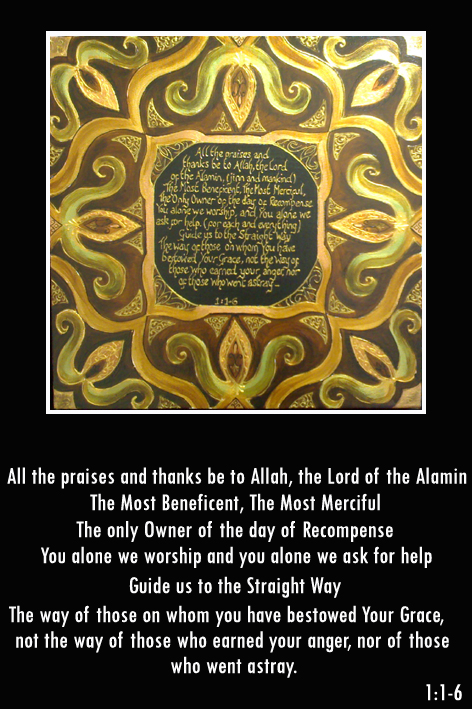
Holy Qu'ran
 Know that the state of one's religious and worldly affairs depend upon soundness of one's reflection. Anyone who has a share of it has an abundant share of everything good. It has been said : 'An hour's reflection is better than a year's worship.' 'Ali, may God ennoble his face, has said: 'There is no worship like reflection.' And one of the gnostics; may God have mercy on them all, said: 'Reflection is the lamp of the heart; if it departs the heart will have no light.'
Reflections by Imam Al-Haddad (ra)
Tafsir ALQuran
Know that the state of one's religious and worldly affairs depend upon soundness of one's reflection. Anyone who has a share of it has an abundant share of everything good. It has been said : 'An hour's reflection is better than a year's worship.' 'Ali, may God ennoble his face, has said: 'There is no worship like reflection.' And one of the gnostics; may God have mercy on them all, said: 'Reflection is the lamp of the heart; if it departs the heart will have no light.'
Reflections by Imam Al-Haddad (ra)
Thursday, May 14, 2009
Parent's duties


Al-Adab al-Mufrad Al-Bukhari
by Imam Bukhari
Translated by: Ustadha Aisha Bewley
V. Looking after children
45. A child is a source of both honour and cowardice
84. 'A'isha said, "Abu Bakr said, 'By Allah, there is no man on the face of the earth that I love better than 'Umar.' Then he went out and came back and said, 'How did I swear, daughter?' I told him what he had said. Then he said, 'He is dearer to me although one's child is closer (to one's heart).'"
85. Ibn Abi Nu'm said, "I was with Ibn 'Umar when a man asked him about the blood of gnats. He asked, 'Where are you from?' 'From the people of Iraq,' he replied. He said, 'Look at this man! He asks about the blood of gnats when they murdered the grandson of the Prophet, may Allah bless him and grant him peace! I heard the Prophet, may Allah bless him and grant him peace, say, 'They are my sweet basil in this world.'"
46. Carrying a child on one's shoulders
86. Al-Bara' said, "I saw the Prophet, may Allah bless him and grant him peace, when al-Hasan was on his shoulder. He was saying, 'O Allah, I love him, so love him.'"
47. A child is a source of joy
87. Jubayr ibn Nufayr said, "One day we were sitting when al-Miqdad ibn al-Aswad when a man passed us. The man said, 'Blessing be to those two eyes which saw the Messenger of Allah, may Allah bless him and grant him peace. By Allah, I wish that I had seen what you have seen and witnessed what you have witnessed!' This angered al-Miqdad and that surprised me as the man had said nothing but good things. Then he turned to them and said, 'What made the man desire to summon back what Allah has taken away? Does he not realise what his situation would be if he had seen him? By Allah, if certain people had been with the Messenger of Allah, may Allah bless him and grant him peace, Allah would have thrown them on their faces into Hellfire since they would neither have answered nor confirmed him? Do you not praise Allah Almighty since He brought you forth and you only know your Lord and confirm what your Prophet, may Allah bless him and grant him peace, brought? You see enough affliction in other people. By Allah, the Messenger of Allah, may Allah bless him and grant him peace, was sent in the harshest state in which any Prophet was ever sent – in a gap (in the line of prophethood) and the time of Ignorance. They did not believe that the deen was better than worshipping idols. He brought the Discrimination by which it is possible to discriminate between the true and false, and which can part a father from his child. Then a man will think of his father, child or brother as an unbeliever. Allah has loosened the locks of his heart by faith and he knows that the other person will be destroyed in the Fire. Therefore his eye is not cool since he knows that the one he loves will be in the Fire. It is what Allah says, "Those who say, 'Our Lord, give us joy in our wives and children." (25:74)'"
48. A person who makes supplication that his friend will have a lot of money and many children
88. Anas said, "One day I visited the Prophet, may Allah bless him and grant him peace, and there was only myself, my mother and my aunt, Umm Hiram. When he came to us, he asked us, 'Shall I pray with you?' It was not the time of an obligatory prayer." One of those listening to the person relating this asked, "Where did he put in Anas in relation to him?" The reply was, "He put him to his right." The report from Anas continues, "Then he prayed with us and made supplication for us, the people of the house, that we would have the best of the blessings of this world and the Next. My mother said, 'Messenger of Allah, make supplication to Allah for your little servant,' and he asked Allah to grant me every blessing. At the end of his supplication, he said, 'O Allah, grant him a lot of money and many children and bless him!'"
49. Mothers are merciful
89. Anas ibn Malik said, "A woman came to 'A'isha and 'A'isha gave her three dates. She gave each of her two children a date and kept one date for herself. The children ate the two dates and then looked at their mother. She took her date and split in it two and gave each child half of it. The Prophet, may Allah bless him and grant him peace, came and 'A'isha told him about it. He said, 'Are you surprised at that? Allah will show her mercy because of her mercy towards her child.'"
50. Kissing Children
90. 'A'isha said, "A bedouin came to the Prophet, may Allah bless him and grant him peace, and asked, "Do you kiss your children? We do not kiss them.' The Prophet, may Allah bless him and grant him peace, said, 'Can I put mercy in your hearts after Allah has removed it from them?'"
91. Abu Hurayra said, "The Messenger of Allah, may Allah bless him and grant him peace, kissed Hasan ibn 'Ali while al-Aqra' ibn Habis at-Tamimi was sitting with him. Al-Aqra' observed, 'I have ten children and I have kissed any of them.' The Messenger of Allah, may Allah bless him and grant him peace, looked at him and said, 'Whoever does not show mercy will not be shown mercy.'"
51. The parent teaching adab and his duty towards his child
92. Numayr ibn Aws said, "They used to say, 'Correct action is a gift from Allah, but adab comes from the parents."
93. An-Nu'man ibn Bashir said that his father had carried him to the Messenger of Allah, may Allah bless him and grant him peace. He said, 'Messenger of Allah, I testify to you that I have given an-Nu'man such-and-such. (It was a slave). The Prophet asked, "Have you given each of your children the same"?" "No," he replied. He said, "Then testify to someone other than me." Then the Prophet asked, "Do you not want to show equal kindness to all of them?" "Indeed I do," he replied. He said, "Then do not do it."
52. The dutifulness of a father to his child
94. Ibn 'Umar said, "Allah has called them the 'dutiful' (al-Abrar) because they are dutiful (birr) to their parents and children. Just as you have a duty which you owe your parent, so you have a duty which you owe your child."
53. Someone who does not show mercy will not be shown mercy
95. Abu Sa'id that the Prophet, may Allah bless him and grant him peace, said, 'Someone who does not show mercy will not be shown mercy."
96. Jarir ibn 'Abdullah said, "The Messenger of Allah, may Allah bless him and grant him peace, said, 'Allah will not show mercy to someone who does not show mercy to people."
97. Same as 97.
98. 'A'isha said, "Some bedouins came to the Prophet, may Allah bless him and grant him peace. One of their men said to him, 'Messenger of Allah, do you kiss children? By Allah, we do not kiss them.' The Messenger of Allah, may Allah bless him and grant him peace, said, 'Can I put mercy in your hearts after Allah has removed it from them?'"
99. Abu 'Uthman reported that 'Umar wanted to appoint a man as governor. The governor said, "I have such-and-such a number of children and I have never kissed any of them." 'Umar said, "Allah Almighty will only show mercy to the kindest of His slaves."
54. Mercy consists of a hundred parts
100. Abu Hurayra reported that the Messenger of Allah, may Allah bless him and grant him peace, said, "Allah Almighty has divided mercy into one hundred parts. He kept ninety-nine parts and sent down one part to earth. Because of that one single part, creatures are merciful to one another so that even the mare will lift its hooves away from its foal so that it does not trample on it."
Know that the state of one's religious and worldly affairs depend upon soundness of one's reflection. Anyone who has a share of it has an abundant share of everything good. It has been said : 'An hour's reflection is better than a year's worship.' 'Ali, may God ennoble his face, has said: 'There is no worship like reflection.' And one of the gnostics; may God have mercy on them all, said: 'Reflection is the lamp of the heart; if it departs the heart will have no light.'
Reflections by Imam Al-Haddad (ra)
 Know that the state of one's religious and worldly affairs depend upon soundness of one's reflection. Anyone who has a share of it has an abundant share of everything good. It has been said : 'An hour's reflection is better than a year's worship.' 'Ali, may God ennoble his face, has said: 'There is no worship like reflection.' And one of the gnostics; may God have mercy on them all, said: 'Reflection is the lamp of the heart; if it departs the heart will have no light.'
Reflections by Imam Al-Haddad (ra)
Darul Quran Huffaz Lake Malaysia
God loves:
those who do good deeds (2:195)
those who ask Him for forgiveness (2:222)
those who purify themselves (2:222)
those who are God-fearing (3:76)
those who are steadfast (3:146)
those who trust Him (3:159)
those who act justly (5:42)
those who strive for His cause (61:4)
those who follow His Prophet (3:31)
Know that the state of one's religious and worldly affairs depend upon soundness of one's reflection. Anyone who has a share of it has an abundant share of everything good. It has been said : 'An hour's reflection is better than a year's worship.' 'Ali, may God ennoble his face, has said: 'There is no worship like reflection.' And one of the gnostics; may God have mercy on them all, said: 'Reflection is the lamp of the heart; if it departs the heart will have no light.'
Reflections by Imam Al-Haddad (ra)
Crystal Mosque Trengganu Malaysia

The mosque, being the essential meeting-place of Muslims five times a day, became also a general centre where all important matters relating to the welfare of the Muslim community were transacted and where Muslims gathered together on all important occasions. The Holy Prophet himself (with his wife 'Ā'ishah) witnessed a display with lances given by some Abyssinians in the mosque (b. 19). Hassān ibn Thābit recited in the mosque his poems in defence of the Holy Prophet (h. 20), juridical affairs were also settled ill the mosque (b. 21). A tent was set up for a wounded soldier in the mosque (b. 22). Even a freed handmaid had a tent set up for her in the yard of the Mosque (h. 23). Deputations were received in the mosque and sometimes even lodged there (h. 24). A prisoner who was an idolater was once kept in the mosque (h. 25). On another occasion it served the purpose of the treasury (h. 26). The mosque was thus not only the spiritual centre of Muslims but also their educational, political and social centre, their national centre in a general sense.
Know that the state of one's religious and worldly affairs depend upon soundness of one's reflection. Anyone who has a share of it has an abundant share of everything good. It has been said : 'An hour's reflection is better than a year's worship.' 'Ali, may God ennoble his face, has said: 'There is no worship like reflection.' And one of the gnostics; may God have mercy on them all, said: 'Reflection is the lamp of the heart; if it departs the heart will have no light.'
Reflections by Imam Al-Haddad (ra)
Tranquility
Melaka Malaysia
Allah, the Exalted, says:
"And the (faithful) slaves of the Most Gracious (Allah) are those who walk on the earth in humility and sedateness, and when the foolish address them (with bad words) they reply back with mild words of gentleness.'' (Al Qur'an : 25:63)

Allah, the Exalted, says:
"And the (faithful) slaves of the Most Gracious (Allah) are those who walk on the earth in humility and sedateness, and when the foolish address them (with bad words) they reply back with mild words of gentleness.'' (Al Qur'an : 25:63)
Know that the state of one's religious and worldly affairs depend upon soundness of one's reflection. Anyone who has a share of it has an abundant share of everything good. It has been said : 'An hour's reflection is better than a year's worship.' 'Ali, may God ennoble his face, has said: 'There is no worship like reflection.' And one of the gnostics; may God have mercy on them all, said: 'Reflection is the lamp of the heart; if it departs the heart will have no light.'
Reflections by Imam Al-Haddad (ra)
The Great Mosque, Makkah, Mecca
SubhanAllah pure magnificent
The first mosque built on the earth is the Sacred Mosque, the Ka'bah built at Makkah also called Bakkah (v. 1); and all mosques should therefore face towards the Sacred Mosque (v. 2: h. 3). The Prophet's Mosque at Madīnah was a simple structure made of rough material; and though in rebuilding it finer material was used by 'Uthmān, the third Caliph, it still retained its simplicity (b. 4). A mosque should be a simple structure . it should not be decorated (b. 5), and should have no pictures or statues in it (b. 8). It should be kept clean (hh. 9,10) and even perfumed (h. 9). Its only furniture consists of a pulpit, wherefrom the Imām delivers a sermon on Fridays or addresses people on other important occasions. and of mats on which prayers are said (hh. 11, 12), though prayers may be said even on bare ground (h. 13).

The first mosque built on the earth is the Sacred Mosque, the Ka'bah built at Makkah also called Bakkah (v. 1); and all mosques should therefore face towards the Sacred Mosque (v. 2: h. 3). The Prophet's Mosque at Madīnah was a simple structure made of rough material; and though in rebuilding it finer material was used by 'Uthmān, the third Caliph, it still retained its simplicity (b. 4). A mosque should be a simple structure . it should not be decorated (b. 5), and should have no pictures or statues in it (b. 8). It should be kept clean (hh. 9,10) and even perfumed (h. 9). Its only furniture consists of a pulpit, wherefrom the Imām delivers a sermon on Fridays or addresses people on other important occasions. and of mats on which prayers are said (hh. 11, 12), though prayers may be said even on bare ground (h. 13).
Know that the state of one's religious and worldly affairs depend upon soundness of one's reflection. Anyone who has a share of it has an abundant share of everything good. It has been said : 'An hour's reflection is better than a year's worship.' 'Ali, may God ennoble his face, has said: 'There is no worship like reflection.' And one of the gnostics; may God have mercy on them all, said: 'Reflection is the lamp of the heart; if it departs the heart will have no light.'
Reflections by Imam Al-Haddad (ra)
Melaka Strait Mosque / Masjid Selat Melaka I
Awesome view
 Know that the state of one's religious and worldly affairs depend upon soundness of one's reflection. Anyone who has a share of it has an abundant share of everything good. It has been said : 'An hour's reflection is better than a year's worship.' 'Ali, may God ennoble his face, has said: 'There is no worship like reflection.' And one of the gnostics; may God have mercy on them all, said: 'Reflection is the lamp of the heart; if it departs the heart will have no light.'
Reflections by Imam Al-Haddad (ra)
HDR#05 - Ketenangan Abadi?
Beautiful shot
 Know that the state of one's religious and worldly affairs depend upon soundness of one's reflection. Anyone who has a share of it has an abundant share of everything good. It has been said : 'An hour's reflection is better than a year's worship.' 'Ali, may God ennoble his face, has said: 'There is no worship like reflection.' And one of the gnostics; may God have mercy on them all, said: 'Reflection is the lamp of the heart; if it departs the heart will have no light.'
Reflections by Imam Al-Haddad (ra)
Tuesday, May 12, 2009
Poem Dedicated to Habib Umar


A day’s journey with Habib Umar
It was a sleepless night before that great day,
My anxiety grew without the notice of time
Clutching over a dream of Habib Umar having zikrullah with my family
While awaiting the arrival of him and the other ‘alims before the daybreak
Subhan Allah………….
Earnestly preparing breakfast for him and 15 guests
But who knows the whole town will turn up abruptly
Hoping that he savours it with delight
As my heart delights his presence amidst us
Like a miracle the pouring rained stopped
With the arrival of him at the door
Alhamdulillah…………………..
Inspired by his inspirational dua for my family
On his arrival at the door
His duas is not only for the living
But also for the dead at the cemetery is his liking
Subhan Allah………………..
Habib Umar gave a small talk at ICV
How I wish I was there
Our mosque at Asr was packed to the max
Upon his arrival to endow another inspirational talk
On how we have to remember (SWT) through zikrullah,
As only through the remembrance of Allah
Peace and tranquility can be found
He taught us how to achieve Khushu in our hearts,
To perfect khushu in prayer,
one should have a conscious fear of Allah,
pray in a calm and collected manner,
perform every act and movement with humility
make full awareness of its significance,
feeling the experience of serenity and tranquility.
The believers, by means of illumination of faith,
self-purification, good moral conducts, God's-Remembrance,
and righteous deeds make their heart and souls illuminated
SubhanAllah short and sweet,
Ending his impressive talk the most powerful way,
uplifting and empowering dua as usual
his presence resembles
The God-fearing people
The reflection of salafu soleh
During those days of the early Islamic revival
Earnest to serve him by getting his dinner ready
Knowing later he prefers to rest
Then Habib Umar has to leave for the night event at Melb Uni
where he was eagerly looking forward to
He never fails in smiling
Answering all the questions humbly
Loving all his sweet face expressions just make my day.
Upon his coming back to the house to have his dinner and green tea,
Sadly to find out Habib Umar has to cut short his trip,
leaving at 3 in the morning for UAE.
How I was touched by his graceful way,
Accepting my gift and making a dua for my family
Hopefully Habib Umar enjoyed his stay here
as much as we love him to be with us longer
Habib Umar we make dua for you that you’ll come back here every year:)
Know that the state of one's religious and worldly affairs depend upon soundness of one's reflection. Anyone who has a share of it has an abundant share of everything good. It has been said : 'An hour's reflection is better than a year's worship.' 'Ali, may God ennoble his face, has said: 'There is no worship like reflection.' And one of the gnostics; may God have mercy on them all, said: 'Reflection is the lamp of the heart; if it departs the heart will have no light.'
Reflections by Imam Al-Haddad (ra)
Monday, May 4, 2009
Flickr
This is a test post from  , a fancy photo sharing thing.
Know that the state of one's religious and worldly affairs depend upon soundness of one's reflection. Anyone who has a share of it has an abundant share of everything good. It has been said : 'An hour's reflection is better than a year's worship.' 'Ali, may God ennoble his face, has said: 'There is no worship like reflection.' And one of the gnostics; may God have mercy on them all, said: 'Reflection is the lamp of the heart; if it departs the heart will have no light.'
Reflections by Imam Al-Haddad (ra)
Thursday, April 30, 2009
Marriage is a Bliss


 Know that the state of one's religious and worldly affairs depend upon soundness of one's reflection. Anyone who has a share of it has an abundant share of everything good. It has been said : 'An hour's reflection is better than a year's worship.' 'Ali, may God ennoble his face, has said: 'There is no worship like reflection.' And one of the gnostics; may God have mercy on them all, said: 'Reflection is the lamp of the heart; if it departs the heart will have no light.'
Reflections by Imam Al-Haddad (ra)
Raising Children in Deen and Dunya

Raising Children in Deen and Dunya-Sr Hina Khan Mukhtar 2009
I still vividly remember the first night I spent by myself in the hospital after delivering my eldest son Shaan. The guests were gone for the day, the hallway lights were dimmed, the nurses were speaking outside my room in muted tones.
"Knock, knock!" came a cheerful voice from the doorway. "Someone's hungry and wants his mommy!"
The nurse wheeled in the crib that held my newborn, only a few hours old at the time. She cooed over him as I struggled to sit up, then efficiently handed him into my waiting arms, bustling out of the room after giving me a few words of encouragement.
I pulled the blanket away from his cheek and smiled in awe at this fragile, little creature who was being left alone with me for the first time ever. I felt privileged to be trusted with his care, overwhelmed with the weight of responsibility. No one was watching over my shoulder; he was all mine and I could do whatever I wanted.
I felt it was an appropriate time to take care of something that no one had thought of arranging so far --- introductions.
"Assalaamu alaikum," I whispered to the warm bundle nestled against my chest, "I'm your mommy." I stroked his face and then asked the rhetorical question that every mother has asked since time immemorial. "Now...how am I going to raise you?"
It's a question that I have continued to ask since that first magical night in the maternity ward.
I've asked it of grandparents, parents, sons, and daughters. I've asked it of Pakistanis, Indians, Afghans, Arabs, Americans, Asians, and Africans. I've sat people down at parties, emailed friends' parents, called up aunties on the telephone, and stopped uncles on their way out the door. Any family whose practice of Islam has impressed me, any child whose manners have stunned me, any teenager whose conduct with his or her sibling has given me reason for pause, any adult whose balance of deen (religion) and dunya (world) has wowed me, I have accosted and asked,
"What exactly did your parents do with you?!"
"How did you raise your children?!"
"I beg you, tell me the secret of bringing up Mu'mineen like the ones I see in your home!"
What I have found in my years of "field research" is that nearly all of these families have stumbled upon the same basic secrets to success. While many of them don't necessarily know one another, time and time again they have given me the same advice, the same tips, the same rules. I would catalogue their stories in my head, thinking I could easily remember them later. So when I was recently approached with the request for an article on Muslim parenting tips, I jumped at the chance to put it all down in writing and thus preserve the valuable insights I have gathered over the course of the past twelve years or so.
Here then, for my benefit and yours, are the tips from the "experts", the tried-and-true heroes who have worked hard at (and, insha'Allah, succeeded at) securing their children's minds, hearts, and souls. These words come from those parents -- like you -- whose primary purpose in life has been to direct their sons and daughters onto the Path they believe will earn them the Pleasure of their Creator and the respect of their fellow human beings. Some of the advice may seem "common sense", the type you could hear on any daytime talk show or read in any self-help book. Other tips genuinely surprised me at how specific and unyielding they were in their insistence that "This is the only way". While there has been a whole variety of advice given to me, I have noticed a pattern emerging where the same ten "Rules of the Game" seem to keep reappearing in different shapes and forms; it is those dominant tips that I have chosen to focus on for the purpose of my article.
I have seen with my own eyes children under the age of ten who willingly set their own alarms to get up for Tahajjud prayer. I have hosted a young soccer marvel in my home who begins his day before mine by reciting Quran at Fajr. I know of an Ivy League university student who insisted on turning the car around because she realized she had left home without giving her mother salaams. I have been acquainted with doctors who make more money in a single month than most people make in a single year yet choose to live in small homes with no mortgages so that their salaries can be spent supporting scholars of Islam. My husband and I work with a young man who once flew with his mother to Jordan, then turned around and returned on the next flight home --- all of this so that his single mother didn't have to travel across the world alone. I have witnessed fourth graders who were able to sit quietly with impeccable etiquette in front of Muslim scholars while the adults around them stretched, yawned, and sighed. I have heard children silence their young friends with urgent reminders, "Don't say that about him! It's backbiting!"
A sign of someone whom Allah loves is that when you see him/her, you remember Allah. The examples I have listed here are all people who have caused me to wonder about my own station with Allah in relation to theirs; they have motivated me to at least try to change, to improve. I'm sure readers will agree that, although Allah Alone knows the hidden reality of hearts, these people at least seem to have triumphed both in their embodiment of the true spirit of Islam and in their practical participation in the dunya. I pray that Allah Subhana wa Ta'ala will continue to send examples like them into our lives so that we may continue to learn and implement that which draws us closer to Him. Aameen.
1.) Dua, Dua, Dua
"None of this is from us," insists one mother of three UC Berkeley graduates who have never voluntarily missed a single prayer. "Everything begins and ends with dua. It is only by His Generosity that we have been blessed with believing children; we had nothing to do with it. Now that we have it, we try to hold onto it by showing gratitude and not taking it for granted."
Every single family I have "interviewed" about raising children in this day and age inevitably began by reminding me about the power of supplication. "Every success I have seen in my family's life, I can remember having prayed for it first," admits one grandmother of three huffadh (memorizers of Quran). "If my dua doesn't come true in this world, I have faith that it will in the next one, so I have patience."
Another mother of four tells me, "I recited Surah Maryam every single day of my pregnancy. I want pious children above all else -- it's all that matters."
A convert friend of mine suggests that couples who are about to embark on the path of parenthood should ask themselves, "Why do we even want children?" She believes in renewing one's intentions on a daily basis. "Who are we doing this for?" When she gets embarrassed by something her children say or do, she questions herself, "Why am I upset? Is it because I'm afraid that they're doing something displeasing to Allah? Or is it because I'm afraid that they're displeasing people?"
Her unwavering dua is that her children live their lives seeking only His pleasure.
Many families shared with me their reliance on Salaat-ul-Istikhaara (Prayer for Guidance) before making any major life-altering decisions and Salaat-ul-Haajah (Prayer for Need) when desiring something they felt was crucial for their children's well-being.
"All that I have is due to my mother's duas," believes one mother of five children. "She was the one who was always praying for us, even when we forgot to."
2.) Suhba (companionship) will make you or break you.
"There were times we sacrificed our own friendships in order to do what was best for our children," a couple married for sixteen years tells me. When pressed for reasons why one would end a relationship, they explain, "Before we had children, we had friends who 'drank socially', who played poker, who hosted dance parties. Once our kids were born, we avoided those types of atmospheres. Our social gatherings are now the type where both the respected elders and the innocent children feel welcome and comfortable."
"It doesn't necessarily need to be that it's the 'drinking, gambling, partying crowd' that is holding you back," muses a mother of elementary school children upon hearing the couple's history. "I have one set of 'dinner party friends' who believe in a 'children should be seen and not heard' philosophy. They plant the kids around TV sets and video games while the parents socialize in other rooms. Then I have another group of friends who engage their children in the adult conversations, who don't keep the younger ones 'out of sight, out of mind'. It's not much of a mystery which set of adults my own kids prefer to be around."
"Sometimes I look around at the people I hang with and I think 'What happened?'" laughs a mother who has chosen to homeschool her three kids. "None of these people are the type I would have chosen as friends when I was younger, but I admire the way they live their lives and crave the peace and tranquility they trail behind them everywhere they go. They have a sense of purpose and an awareness of Allah in everything they do. I want to pass those qualities on to my own kids, so here we are."
"Suhba is of the utmost importance. If you sleep with the dogs, don't be surprised if you rise with the fleas," a respected scholar advises. The words that struck me the hardest with their wisdom? "When you sit with People of the Dunya, you become a drop in their ocean, but when you sit with People of the Akhira, the dunya becomes a drop in your ocean."
"A person is known by who their friends are," my mother always reminded us.
"I had a girlfriend whose company I really enjoyed," remembers one mother wistfully. "She was the best person to share a cup of tea with, to go shopping with." So what happened? "She and her husband decided that they weren't going to raise their children as Muslims. Even though we liked each other a lot, we just didn't see eye to eye on what was appropriate for kids. There were certain behaviors in her home that were complete anathema to us. I decided that I couldn't have an independent friendship with the mom; at some point her kids were going to start influencing my kids, and we needed to part ways...so we did."
One father confesses with a sheepish laugh, "I don't know if our children are so God-conscious because of anything we necessarily did. My nieces are very spiritual young women, and my own daughters were always drawn to them. I think we got lucky that our children wanted to follow in their older cousins' footsteps."
"On the Day of Judgment, you'll be standing with the ones you loved most in the dunya," reminds another well-loved scholar, "so choose your friends wisely."
More than one parent has gushed about the power a charismatic aunt or uncle, imam, halaqa leader, or Sunday School teacher has had over their young ones. Many of the adults gave up a good portion of their weekends, driving long distances to take their children to gatherings and events where they hoped their children would benefit from being around like-minded people. "I firmly believe that no friends are better than bad friends," states a father of five childen, "but I did go the extra mile to make sure that my kids did have friends with whom they connected."
"Sometimes kids start to tune out what the parents say because it's all been said before," a mother of a middle schooler smiles. "My own parents told me to pray all my life, but it wasn't until I connected with an articulate teacher who explained how prayer was for our benefit that I finally got the message...and it was my friends who led me to that teacher."
3.) The Prophet (salallaahu alaihi wasallam) was a living, breathing reality in our lives.
"What better suhba is there than one who reminds another of the deen? Can there be a better 'companion' than the Prophet (salallaahu alaihi wasallam)?" asks a UCLA graduate married to a doctor who also does interfaith work for Islam.
When a learned scholar was recently asked, "What should we teach our children?", his response was swift and unequivocal --- "The seerah (biography of the Prophet) and nasheeds (devotional songs of praise). If your kids love the Prophet, they will automatically love Allah."
"The best way to call people to Islam is to have them fall in love with the Prophet," insists another scholar. "Children should fear and love Allah, but teach them about the love first. They can learn about the fear when they're older. And who loved Allah more than the Prophet (salallaahu alaihi wasallam)?"
An eight-year-old recently burst into tears when he realized that his mother had neglected to wake him up for the Fajr prayer. The adults who were present exchanged glances, wondering what kind of terror the parents must have driven into this young one's heart. Was he afraid that Allah was going to punish him? Did he think he was going to burn in hell? Upon inquiry, the child revealed that the real cause of his distress was the knowledge that he had neglected something the Prophet (salallaahu alaihi wasallam) took very seriously, something he had exhorted the believers about on his death bed. Needless to say, the mother has been vigilant about waking her son on time for prayer ever since.
Many of the parents made it a regular part of the daily routine to recite the sunnah duas --- the duas for beginning and ending meals, the duas for entering and leaving the home, the duas for studying --- until it became automatic. It isn't a surprise for guests in their homes to see children as young as three reciting the dua for traveling as they get strapped into their car seats. "We didn't minimize any sunnah in our home," one Pakistani-American father tells me. "Once you start to think, 'Oh, that sunnah isn't a big deal; we can ignore it', you've entered dangerous territiory. What comes next?"
"A co-worker recently asked me to name one thing that makes Islam different from other faiths," my brother-in-law once shared with me. "Among other things, I told him that with Islam I got a prophetic example for how to live my day-to-day life. No other prophet's life is so carefully recorded as our Prophet's (salallaahu alaihi wasallam)."
With toddlers and pre-schoolers, I noticed that a lot of the parents mentioned the Prophet Muhammad (salallaahu alaihi wasallam) as if he were a relevant person in their lives. They talked about him the way one would talk about any respected elder whom the child adored. It wasn't unusual to hear parents telling their little ones, "The Prophet Muhammad (salallaahu alaihi wasallam) loved green, so let's wear our green clothes for Friday Prayer!" or "Prophet Muhammad (salallaahu alaihi wasallam) taught us that we should sit down when we get angry, so let's sit down since you're feeling so frustrated."
While visiting my sister in Southern California one weekend, I noticed that an English translation of Imam Tirmidhi's "Shama'il" (Characteristics) sat on my six-year-old nephew's beside table. She informed me that it was part of their son's bedtime ritual for her husband to share one hadith from that famous ninth century text with him. "Knowing personal things like the fact that the Prophet (salallaahu alaihi wasallam) liked to eat dates with cucumbers makes our son feel like he actually knows the Prophet (salallaahu alaihi wasallam)."
"Today's generation is so fortunate, masha'Allah," says one grandmother. "When our children were younger, there was hardly any quality Islamic literature or media out there. Today's kids have so many choices! My grandchildren go through a different seerah book every year. They are constantly humming new songs about the Prophet (salallaahu alaihi wasallam). I pray that they always find joy in learning about (and then following) their Prophet, insha'Allah."
4.) Having fun wasn't "haraam" in our home, but we kept the home environment as pure as possible.
It would be extremely remiss of me if I failed to mention that every single family I interviewed emphasized the need to severely limit exposure to entertainment media --- television in particular, but internet and video games included. There were some families who didn't have a television set in the house at all, while there were others who allowed their children to watch pre-screened Saturday morning cartoons or a family night movie. Computers were always set in a public area of the house where email exchanges and internet research were conducted on a set schedule under the watchful eyes of involved parents.
"If Shaytan (Satan) were to ring our doorbell and ask if he could come in and babysit our children, we would throw him out," one scholar says, "yet we allow the television set to do exactly that...we literally invite Shaytan in when we turn the TV on!"
"Preserving my children's fitra (primordial state) is of the highest priority to us," one mother of two pre-schoolers tells me. "Right now, the difference between right and wrong is so clear in their eyes; they really get it when we explain what's what to them. The entertainment industry's depiction of what's 'normal' manages to confuse adults, so just imagine what it does to children!"
"We're Indian, but we never watched Bollywood films in our home," a friend admits matter-of-factly. "We didn't have bhangra dance parties; we didn't wear revealing clothing like skimpy saris and sleeveless blouses; we weren't allowed to be overly chummy with our guy cousins."
Basically, what she's letting me know is that what is often excused as "culture" was not allowed to contradict the Islamic shariah her parents taught her to respect.
"But don't think we were bored or deprived!" she is quick to reassure me. "My parents inculcated in us a love of Urdu poetry. We read classic English literature aloud to one another in the evenings and went on father-daughter hikes in the mornings. My mother showed us how to garden, my father taught us how to fish. My brother had a paper route; the younger ones were Girl Scouts. We had a home life full of energy and activity."
"It's important to replace every haraam you stop your child from with at least two halaals they can enjoy," advises a popular Muslim family counselor. "You don't want your children to grow up thinking that Islam is just a bunch of no's --- 'no, you can't do this; no, you can't do that.'" She laughs heartily, "Make it about 'yes, we can!'"
I have a Yemeni friend who has taken that philosophy to heart with gusto. She and her husband may not throw birthday or New Year's Eve parties, but you should see the festivities they do arrange. When her twins memorized the thirtieth juz (chapter of the Quran), the picnic in the park was enjoyed with two separate gourmet cakes and party favors for all. When this same brother-sister team went on to memorize the twenty-ninth juz, they came home from school to discover their bedrooms decorated with streamers and presents. My five-year-old son Raahim and his pre-school buddies recently memorized ten surahs under this auntie's guidance, and she was quick to organize a party complete with a pinata, awards, balloons, and treats. With memories like these, Muslim adults are bound to look back on their childhoods as a time filled with celebrations, insha'Allah.
"There is so much fitna (tribulation) out there in the world. We can't protect our kids from everything bad," warns a devout grandfather of ten children. "But it is for that very reason that the home must be an oasis where Allah is remembered and obeyed, where children can relax and feel cherished, where they can practice their religion without feeling apologetic or alien. The home environment should be as halaal as possible. Our litmus test was always 'Would we be ashamed if the Prophet (salallaahu alaihi wasallam) were to walk into our house right now? Is there anything we would want to hide?'."
The result of this family's "test" was a tidy, simply furnished home where the television set was absent and books lined the shelves. Flowers bloomed outside every window, intricate Islamic calligraphy adorned the walls, and healthful food was served with generosity and enthusiasm to all who entered. The sense of serenity in the air was something tangible.
I'll never forget what one daughter of a highly respected elder in the community told me when I asked her how her siblings remained so close to their parents despite being raised in a small town with only a handful of Muslims. Didn't they ever rebel? How did they resist the siren song of the un-Islamic peer culture around them? "If you feel love in your home, you don't look for it anywhere else."
5.) Our parents didn't just "talk the talk", they "walked the walk".
In other words, they practiced what they preached.
"I don't get it when I hear mothers telling their kids 'Don't tell lies' and then in the next breath smoothly tell phone callers, 'Oh, he's not home right now' when the husband is sitting right there in front of them," says a medical school resident who is spending time learning Hanafi fiqh as well. "Or how about when parents teach their kids 'It's wrong to backbite' and then complain about the in-laws to anyone who will listen? It's just beyond me."
When pressed for examples of not succumbing to hypocrisy in his own family life, he says that his parents taught him and his siblings the importance of prayer and then never allowed them to miss any, even if it meant praying in the middle of Disneyland. "Our dad taught us that while there might be a time for fun and play, it never comes at the expense of giving up our duties to Allah. And since he was always the first to stand up for prayer, we just naturally followed."
Another experienced mother gave me this age-old advice, "You can teach your kids the rules of prayer all you want, but if you're not going to pray, they're not going to pray. Children learn from what their parents do, not just what they say."
"But it's not enough to just teach your children to pray," interjects another mother who was raised a secular Jew but is now Muslim. "What about how you pray? Do you have presence in your prayer? Are you sad if you ever miss a prayer? Those lessons are all just as important as learning to pray."
I was once working with an African-American convert friend when the time for Maghrib prayer came in. I had been busy taking care of some tasks, but I stopped and said, "Well, I guess I better go get my prayer out of the way."
Startled, she looked up and then chuckled. "In our house, we say we're going to get prayer 'in the way'."
SubhanAllah, what a difference one word makes! What a difference in attitude!
"I was sitting in my room reciting my morning dhikr while the kids were completing an art project in the family room," an Egyptian friend shared with me the other day. "It suddenly struck me that I always recite my litanies in private, so I got up and joined them in their area of the house. They continued to paint while I continued with my prayers. They need to see me doing this...and they need to see me doing this happily."
The other day one of my sons became frustrated while searching for an elusive pencil in the writing desk. He shoved papers aside and slammed the drawer shut when no pencil materialized, grumbling the entire time. I began to lecture him about the merits of patience when I realized that I had behaved in the exact same manner while looking for my keys a few days earlier. Children really are like sponges; they soak in everything around them. "Garbage in, garbage out," cautions one teacher.
"Children need to see that Islam 'worked' in our home," says another scholar. "Islam isn't just about praying and fasting and charity. Islam is an attitude that must be infused in the mundane day-to-day dealings with life. Do parents treat each other with respect? How do they react to the ups and downs of life? Children are constantly learning from their parents, even when the parents don't think they have anything to teach."
6.) I wasn't afraid to be the Bad Guy, but I never behaved badly.
I know more than one mother who doesn't feel comfortable telling her child to pray or maybe to dress more modestly, thinking that her kid will be "mad" at her if she starts holding him/her to higher standards. I know of a couple of fathers who have turned a blind eye to certain immoral behaviors witnessed in their teenagers, never once speaking out, telling their exasperated wives, "I don't want to judge our kids. It's a tough age and they have to fit in."
The adults I've asked for parenting advice had no qualms about upsetting their children from time to time.
"There were times when I knew that I shouldn't go to this place or go out with that person, but I would ask Ammi anyway, wanting her to be the one to put her foot down...and she always did," remembers my brother. "Kids want their parents to set limits and be authority figures, even if they won't admit it."
"I enjoy my children's company; we laugh together, we read the same books, we even share each other's clothes," chuckles one mother of two teenage daughters who race to give up their seats for her. "But at the end of the day, they know that I am their Mother. I am friendly with them, but they cannot treat me like a girlfriend."
"Weakness in those who are supposed to be in a position of authority only invites contempt," contends a mother of two. "It's important to know who's boss."
One father of four looks back on his youth and laughs appreciatively, "My mother didn't worry about not 'rocking the boat' when we were in high school. She was willing to capsize the boat if she found us doing something that wasn't okay with her!"
Other parents impressed upon me the importance of having high expectations of their children. "We have to gently push kids out of their comfort zones," an Afghan father says. "If you expect more, your kids will often pleasantly surprise you, but it's important to communicate those expectations."
One mother always assumed that her children would eventually begin praying simply because they saw that prayer was a priority for her. When a friend asked her why her ten-year-old daughter didn't join the other girls for prayer, this mom realized that she had never communicated her hopes to her own daughter. "It was only a matter of discussing it!" she exclaims with genuine surprise. "I sat her down for a serious 'grown-up' talk. I said, 'Honey, you're older now and prayer needs to be a regular part of your routine.' She listened so attentively! When Asr came in, she ran to get her prayer rug and misbaha (prayer beads) and joined me for salaah. She's the one who wakes me for Fajr now. It's almost as if she was just waiting for me to tell her, 'This is what I expect of you'."
While these parents were quick to lay down the law with their children, there was one "old world law" that they all shied away from --- corporal punishment. "We did not hit our children," they say adamantly.
One grandmother feels very strongly about this issue. "Only uneducated, uncivilized people who are incapable of communication resort to hitting little kids."
"Well, there might be a place for a good old fashioned spanking every now and then," argues a mother of four college students. "When my daughter was four years old, she ran out in public without her underwear on for the umpteenth time. In my opinion, it was too dangerous to let her keep getting away with that kind of behavior, so I finally let her have it. She got the message and never forgot it...and I never had to spank her again."
Physically beating your children for the simplest infractions seemed to be an acceptable mode of discipline a generation or so ago. The parents I spoke with are loath to raise their hands on their kids. "Every time you hit your kids, you have to keep upping the levels," a financial analyst tells me. "I knew of a parent who used to twist her kids' ears. After a while, that had no effect, so she started smacking them on their hands. When the desired behaviors were no longer obtained using that method, she resorted to swatting them on their bottoms and shaking them in frustration. I mean, where does it end?"
I spent a good portion of the afternoon just yesterday baking banana crumb muffins from scratch. I offered one to a son of mine and sent him out on the back deck to enjoy his snack. As I watched in horror from the kitchen window, I saw him breaking off big chunks of the fresh muffins and forcefully slamming them down on to the floorboards outside. I rushed out the door and surveyed the crumbs all over the deck, the same deck I had washed just that morning. "What are you doing?!" I screeched.
He looked up in surprise. "Oh."
"WHAT are you doing?!"
"I'm trying to kill a spider that's bothering me."
I clenched my hands at my side and whispered through gritted teeth, "Son, please walk away from me right now. I'm very upset and I am sure that I will spank you if you are near me and this mess. I need time to cool off, so you better run."
His eyes grew wide and he scampered off.
I'm so grateful that Allah Subhana wa Ta'ala allowed me to restrain myself in that moment of anger. The crumbs were easily swept up, there were still plenty of muffins left, my son learned his lesson about not wasting food, and I was eventually able to laugh at his logic for dealing with arachnids...but only after an hour had passed. Letting out my frustration on him by hitting him might have felt good in that moment, but the resulting misery would have lasted much longer...for both of us.
7.) I always kept them close by.
I wasn't surprised to see that nearly all of the families I spoke with had the mother at home caring for the children, but I was shocked by how many of the families shared the same steadfast rule --- "No sleepovers."
"Every night I know which bed my kid is sleeping in," says a homeschooling mom of two and wife of a university professor. "And that bed is one I can check on whenever I want."
"Friends were always welcome to come to our home for sleepovers," reminisces a young woman who grew up with a twin brother. "My mom went all out --- popcorn during midnight movies, pancakes for breakfast, privacy for chatting and giggling late into the night. But we could never sleep in anyone else's home unless our parents were there with us."
"I saw too many weird things in other friends' homes when I was younger...and that was just during the daytime," remembers an attorney and father of three. "The first time my best friend saw a dirty magazine was when he spent the night at his neighbor's house. I might have resented their strictness a bit when I was younger, but in my heart I knew that my parents were right to keep us in our clean, safe, and cozy home."
"I never let them go far from me when they were little," explains a mother of two when asked by me how to raise a dutiful son like hers. "My kids could have gone on camping trips and overnight field trips with other parents as chaperones, but unless my husband or I were there, they didn't go. My husband was once willing to consider a prestigious boarding school for one of our 'gifted' children, but I said, 'No way.' I just couldn't let my family be split in different directions; the time we had with them was already short enough."
"No nannies or daycares for our family," says a grandmother of five. "And don't think that I wasn't tempted! I raised three babies on my own without any help from grandmothers or aunts. A one income family meant that we only took local vacations and drove second-hand cars. We lived in a small home. I went back to work only after the kids were in school, but I was always at home in time to greet them with a smile, a hug, and an after-school snack. Even now, my children tell me that the smell of peanut butter and jelly gives them a feeling of security."
8.) We didn't spoil our kids nor did we praise them too much.
"It's important to me that my kids don't grow up ingrained in this Sibling Society," a college professor and father of three tells me.
When asked the definition of a "sibling society", he explains that it's the environment where grown adults behave and are treated like children. "We've extended adolescence where we excuse bad behavior by saying 'Oh, he's just going through that rebellious phase. He's only sixteen; he'll outgrow it.' Outgrow it when? Throughout history, puberty has been considered the onset of adulthood; nowadays we have university graduates who behave like babies --- tantrums, irresponsible behavior, no sense of accountability."
This father celebrates his children's birthdays every year by giving them a new toy...and a new duty. "When my son turns seven, he'll get that monster truck he's been craving, but he'll also get a new responsibility for the year --- he has to make sure that all the doors in the house are locked before going to bed."
He and his wife believe that having responsibilities, even small ones, inculcates in children a sense of contribution and chivalry.
I was recently given cause to reflect when a friend of mine politely refused an invitation for her daughter to recite her award-winning poem at a masjid event. "Masha'Allah, she has received a lot attention and praise this past week for that poem," she sighed. "The other day she just happened to be interviewed for a local science program on television too. I just don't think it's beneficial for her nafs (ego) to be in the spotlight too much, so I'm going to have to say 'no'."
This mother believes that praise becomes "cheap" when it is given for that which children have no control over; she feels that kids should have to "earn" the praise that comes their way. "What's the point in telling a child who always gets A's, 'You're so smart'? Or telling a pretty child, 'You're so beautiful'? Telling a child who's struggled through an assignment, 'I'm proud of how hard you worked on that difficult worksheet' is so much more meaningful."
One mother who is often asked the secret behind her kids' contentment with life has this theory to offer: "It's actually something I've discovered by accident. We have never been motivated to buy the latest gadgets and gizmos for our kids. To compensate for the things that we won't buy, we give them something that's free yet still very valuable --- our time. I bake with them, their dad wrestles. We snuggle on the couch and read together. I think they're rarely dissatisfied with material goods because they are just so grateful for what little they do get. They don't have a sense of entitlement. And since whining has never worked anyway, they just don't bother."
The father adds, "Well, to be honest, we are spoiling them, except that we're spoiling them with something that's lasting, not fleeting --- our love."
9.) Talk to your kids.
I was once singing "Rain, rain, go away; Come again another day; Shaan and Ameen want to play" with my kids when my brother interrupted us.
"Don't teach them that! Rain is a blessing! You don't want them rejecting blessings just because they want 'fun'," he chided.
After experimenting with the lyrics, we ended up singing, "Rain, rain, pour, pour, pour; You're a mercy from our Lord; Rain, rain, fall on me; I turn to Allah gratefully." To this day, whenever dark clouds dampen a day that they had hoped to spend outside, my kids console one another by saying, "It's okay. California needs the rain. Allah is being Kind to us."
This suggestion by my brother is a reminder of another piece of advice that families have repeatedly given me --- "Never miss out on a teaching moment."
"When your kids are younger, you should take advantage of every opportunity to guide them, remind them, advise them," instructs an Iraqi father of two girls. "Of course, there's a fine line between nagging and teaching, between being judgmental and being perceptive. Nevertheless, I encourage my children to look at everything through 'the eye of discernment'. What does everything around us mean? Why is that billboard saying that their brand of soda will guarantee a successful party? What was the real reason that car driver honked his horn like that? Why does this movie make parents look like bumbling fools? Is having to wait in a long line ever a reason to lose your temper with a bank teller? Talk, talk, talk to your kids! Even if they don't say anything, believe me, they're listening!"
"I want to get my 'voice' into my kids' heads while they're young," says one mom. "There are so many forces competing for our kids' minds; I want to get in while I can. There will come a time when we all have to let go, but I'm hopeful that my children will always remember their root values once they're out on their own, insha'Allah."
The families I've admired have all made a point of being "present" with their children, answering their questions patiently and respectfully, not getting annoyed with their seemingly random thoughts. The kids feel that they can ask any question and discuss any subject without any judgment on the part of the parents.
"You know that cliche 'There's no such thing as a dumb question'?" asks a Persian friend. "Well, that was always true in our family. I could ask my mom anything, and I was always confident that I would get an honest answer. There were times when I was told that I would have to wait a bit before she was ready to teach me certain truths, but I was able to be patient because I knew that the truth was eventually coming."
10.) They had a pious father who engaged them.
Yes, there are pious mothers who have raised wonderful Muslim kids despite having husbands who not only didn't support them, but even disapproved of their attempts to teach their kids the basics about the deen. And there are single moms who are doing an incredible service to the Ummah by sacrificing, striving, and successfully raising the next generation of believers. We all are more than aware that the mother is the first madrassa (school). And there are examples after examples of mothers who spend the night on the prayer mat weeping in prostration for the future of their families; their secrets are known only to Allah.
But over and over I have seen lackadaisical mothers with pious husbands...and the kids have turned towards their fathers like flowers to the sun. How many of us know of young adults who roll their eyes at their mothers' religiosity while holding their "fun-loving", worldly, secular fathers up as paragons of rationalism and intelligence? There is a power that fathers have over their offspring, the depth of which we can never fully comprehend; the truth manifests itself when we witness which parent the kid most often chooses to emulate.
A majority of the families I spoke with extolled the virtues of the Amir of the House: the man who led his children in congregational prayer, the father who gently but firmly encouraged his daughter's modesty, the husband who fulfilled his wife's rights without demanding his own, the responsible breadwinner, the dad who put a stop to gossip the moment it started, the Muslim who held fast to his principles (whether it was a father who refused to allow his co-workers to shorten his name from "Mohammad" to "Mo" or the dad who wouldn't travel on Fridays so that his Jumah prayer wouldn't be jeopardized ). The grown children remember their father's integrity and quiet examples long after they have entered parenthood on their own, voluntarily choosing to mold their own lives in honor of a man who didn't force his way of life down their throats when they were younger.
"My mother lectured and taught and scolded and reminded us the entire time we were growing up," one mother of three sons remembers with amusement. "My father told me maybe only five things related to the deen my whole life...and yet I remember every single one; I've never forgotten. I only wish he had shared his thoughts with me more often."
IN CONCLUSION
While I have always been a fan of "how to" and "top ten" lists, I have never allowed myself to be deluded into believing that there are any guarantees for raising righteous children. It hasn't been lost on me that the greatest man in humanity, the Prophet Muhammad (salallaahu alaihi wasallam), was intially raised by a single mom...and that too after being sent away to live amongst the bedouins in the desert while still a baby. Many of the "rules" here didn't apply to his blessed life. His was a singular circumstance, having been raised by Allah Subhana wa Ta'ala Himself. All we can do is try to lay out a safe framework in hopes of trying to reach what he (salallaahu alaihi wasallam) reached through Allah's largesse.
If we want to be successful at something, it behooves us to look at those who have succeeded before us. Each of us has something we can learn from the experiences of another.
There may be some who will read through the list of tips I have collected and think, "We didn't do any of those things, yet our kids turned out just fine!"
To them, I say, "Alhamdulillah!" It's true that there are many kids who didn't have a single one of these "rules" applied to their lives, and, by the Grace and Mercy of Allah, have turned out to be exemplary Muslims.
And without going into unnecessary details, I will say that I have also seen the most pious, practicing, loving parents be disappointed by their children at every turn. These parents are in the company of prophets like Prophet Adam and Prophet Nuh (upon whom be peace) who had sons who rejected their teachings --- yet these were fathers who were from among the best of humanity, parents who were in a constant state of supplication and prayer, who received guidance from Above. We can only pray that Allah Subhana wa Ta'ala will not test us through our children the way He tested these great men and their wives. It's interesting to note that many of the men and women in my article have confessed that there were times they felt that they had failed in their duties as parents but took heart knowing that with Allah's help all obstacles could be overcome. Eventually, they all came to the conclusion that there was only "so much" they could do; they needed to submit to Allah's will.
There is great comfort in knowing that parents will be rewarded not for how our children "turn out" but for the intentions we had while raising them, for the steps we took to facilitate their deeni success. All we can do is take the means; the end is up to Allah. "Even if one's kids go astray," advises a scholar, "one should always leave a 'door' open for them and pray that they will one day 'come back'. We should never cut off relations; we should never despair of Allah's Mercy and Guidance."
"Parenting and living in this dunya is such a struggle," reflects one friend. "We have aspirations of who we want to be as parents and we strive to achieve them, and then are saddened by seeing our failures. I guess it's really about the courage to continue to renew one's intentions and to pray for tawfiq (success)."
None of the parents I interviewed felt "safe" or believed that they had won and were now done with their work. They continued to pray for daily tawfiq long after everyone had started lauding them for the fine job they had done raising their children. "It doesn't matter how wonderfully we live our lives," says one local scholar and father of two girls. "What really matters is how we end our lives (husn al-khatima)...we're not safe until we die with imaan (faith) in our hearts."
It is with that knowledge that we pray that Allah Subhana wa Ta'ala grants us the dua for "a pure progeny" that He granted Prophet Ibrahim, Prophet Zakariya, and the mother of Maryam (upon them all be peace). We pray that we are able to be worthy teachers for our children who will carry this noble religion on, a precious trust to be handed from one generation to the next. May we not be "the weak link". Aameen.
"O my Lord! Make me one who establishes regular Prayer, and also (raise such) among my offspring.
O our Lord! And accept Thou my Prayer.
O our Lord! Cover (us) with Thy Forgiveness --- me, my parents, and (all) Believers,
On the Day that the Reckoning will be established!"
~ The Holy Quran (14:40)
COPYRIGHT HINA KHAN-MUKHTAR 2009. ALL RIGHTS RESERVED.
Know that the state of one's religious and worldly affairs depend upon soundness of one's reflection. Anyone who has a share of it has an abundant share of everything good. It has been said : 'An hour's reflection is better than a year's worship.' 'Ali, may God ennoble his face, has said: 'There is no worship like reflection.' And one of the gnostics; may God have mercy on them all, said: 'Reflection is the lamp of the heart; if it departs the heart will have no light.'
Reflections by Imam Al-Haddad (ra)
Subscribe to:
Posts (Atom)